
Aurora Deed Records
Aurora deed records are filed with the Kane County Recorder, which serves the majority of Aurora properties, though parcels in DuPage, Will, and Kendall counties are recorded with those respective offices. To search or obtain Aurora deed records, you will work with the appropriate county recorder based on where the property sits, with Kane County handling most of the city. The recorder maintains instruments such as warranty deeds, quitclaim deeds, mortgage documents, releases, and easements, all indexed by grantor and grantee name and by parcel identification number.
Aurora at a Glance
- City: Aurora, Illinois
- County: Kane County (primarily); also DuPage, Will, and Kendall counties
- Population: 179,898
- County Recorder: Kane County Recorder (Sandy Wegman)
- Address: 719 S. Batavia Ave, Building C, Geneva, IL 60134
- Phone: (630) 232-5935
- Hours: Monday through Friday, 8:30 AM to 4:30 PM
Kane County Recorder
The Kane County Recorder, located in Geneva, is the primary office for Aurora deed records. Sandy Wegman serves as the recorder and her office maintains the official index of all land instruments recorded in Kane County. The office is in Geneva because that is the Kane County seat, not in Aurora itself. Anyone searching for deeds on Aurora properties in Kane County should contact this office or use its online portal.
The Kane County Recorder's website is kanecountyrecorder.net. The site offers a public records search tool where you can look up deeds by name or parcel number. This is a free search. Copies of recorded documents carry a fee, typically $1 per page for standard copies.
In-person visits are accepted Monday through Friday from 8:30 AM to 4:30 PM. If you go in person, bring the grantor or grantee name, approximate recording date, or parcel number. Staff can pull records on demand. Certified copies cost more than plain copies and are sometimes needed for legal transactions.
Mail requests are handled by the same office. Include the document type, names of parties, recording date if known, and a check or money order for the copy fee. The office will return copies by mail when the payment is right.
The state image below links to the Illinois MyDec portal, which handles real estate transfer tax declarations required on most deed recordings.
The Illinois MyDec portal is the system used for filing PTAX-203 real estate transfer declarations electronically. Aurora deed recordings in Kane County require a MyDec declaration or a paper PTAX-203 form for most transactions.
Illinois MyDec Portal - Real Estate Transfer Declarations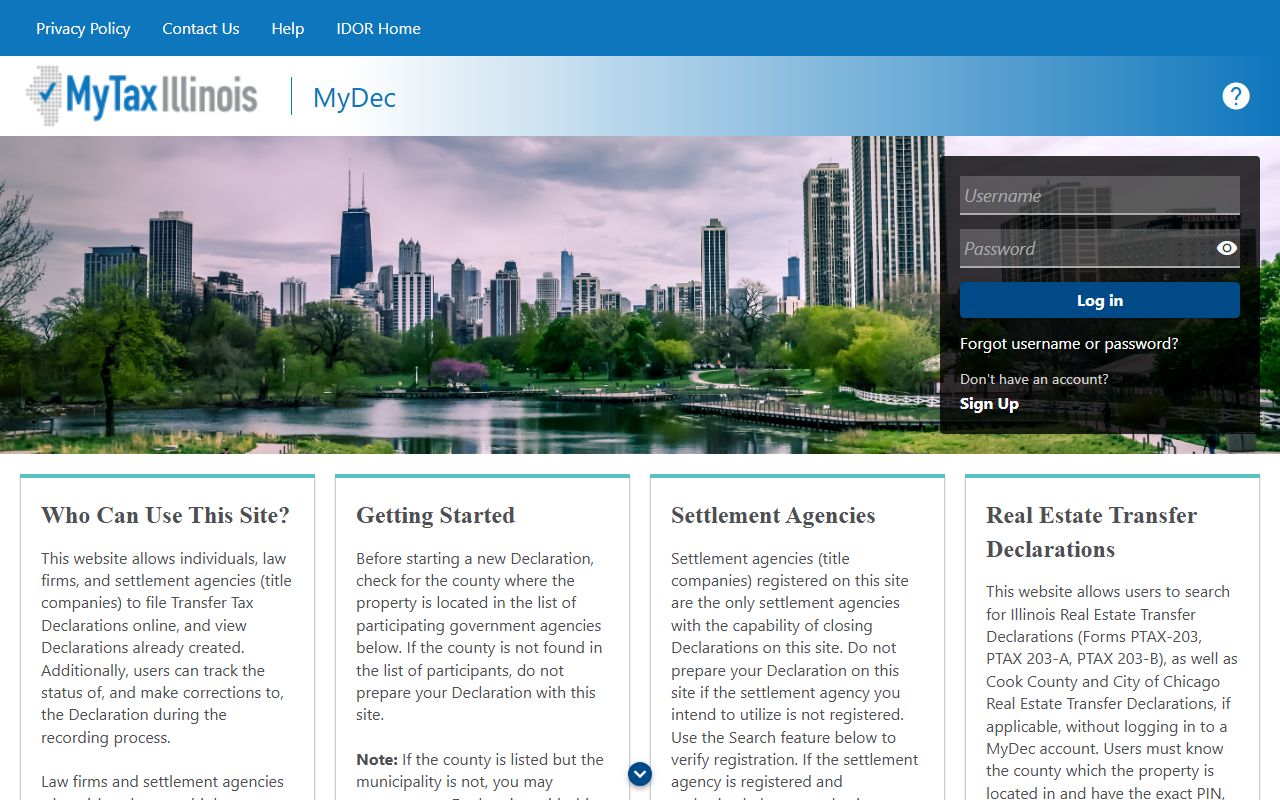
MyDec submissions are completed before recording. The recorder will not accept a deed without a completed transfer declaration unless the transaction qualifies for an exemption under 35 ILCS 200.
Illinois Department of Revenue - PTAX-203
Every taxable deed transfer in Illinois triggers a transfer tax obligation. The state rate is $0.50 per $500 of value. Kane County adds $0.25 per $500. The PTAX-203 form documents the sale price and applies the correct tax rate. Aurora sellers and buyers complete this form before going to the recorder.
Illinois Department of Revenue PTAX-203 Instructions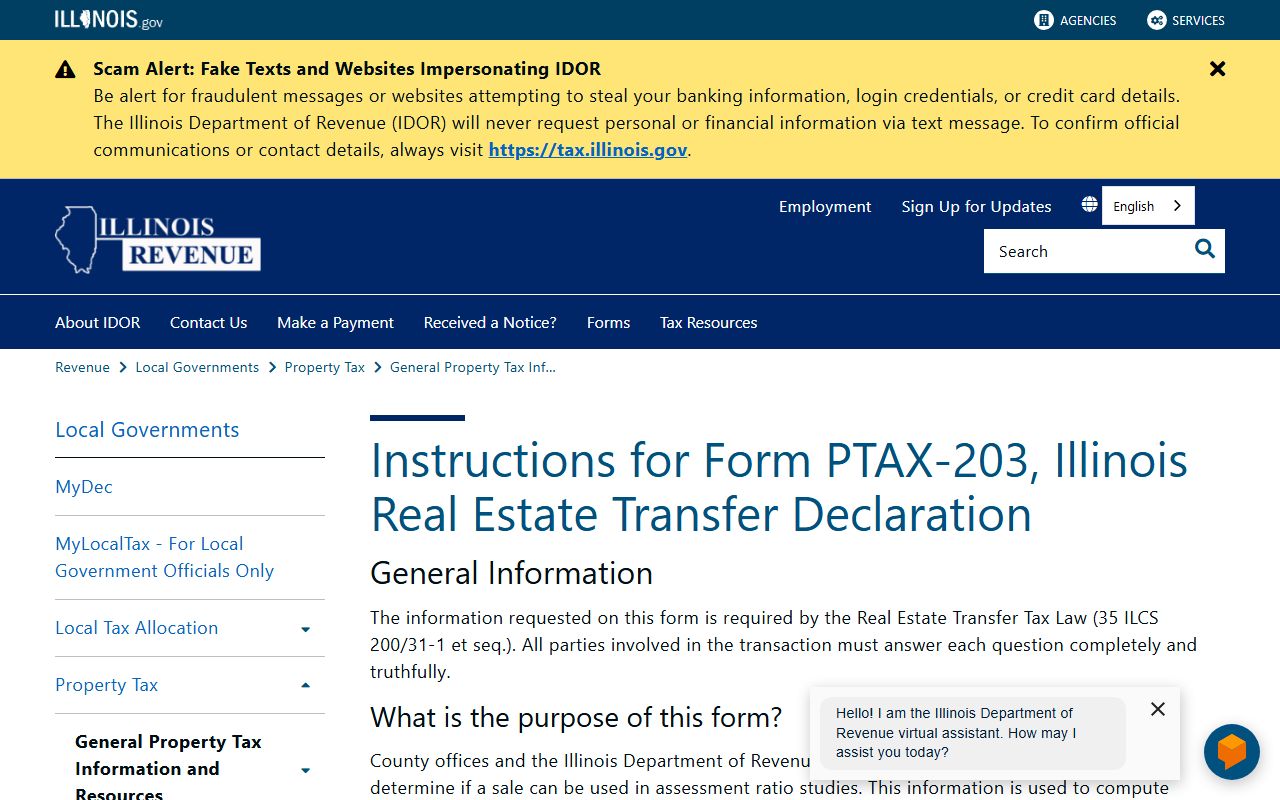
The PTAX-203 form lists the full consideration paid, the type of deed, and the applicable exemptions. Certain transfers are exempt from the tax, including transfers between spouses, transfers to trusts, and transfers correcting a prior deed. These exemptions must still be documented on the form even when no tax is owed.
Aurora also requires a municipal transfer stamp for most property sales. Contact the City of Aurora Finance Department at (630) 844-3613 before recording to determine whether a stamp is needed for your transaction. The city stamp must be obtained before the deed goes to the county recorder.
What Deed Records Contain
A recorded deed in Aurora typically contains the names of the grantor and grantee, the legal description of the property, the type of conveyance (warranty deed, quitclaim deed, trustee's deed, etc.), the consideration or sale price, and the signature of the grantor acknowledged before a notary. The document number and recording date are stamped on by the recorder when it is filed.
Warranty deeds carry the strongest guarantee of title. The grantor promises clear title and will defend against future claims. Quitclaim deeds transfer whatever interest the grantor has without any warranty. Trustee's deeds are used when property held in trust is conveyed. Executor's deeds arise from estate sales.
Beyond the deed itself, the recorder's index for Aurora properties includes mortgages, deeds of trust, mechanic's liens, lis pendens notices, easements, and plats. All of these affect title to real property. A full title search will pull all of these instruments for a given parcel.
Deeds recorded in Kane County are indexed under the grantor-grantee system. The name index goes back many decades. Parcel index number searches are also available online and are often faster for recent transactions.
Recording Requirements for Aurora Deeds
Illinois recording law under 765 ILCS 5 sets the standards for what deeds must contain to be accepted by a recorder. The document must be in English, have original signatures, include an acknowledgment before a notary public, show the name and address of the preparer, and have a return address for the recorded document.
Physical format matters too. The first page must have a blank area at the top right of at least 3.5 inches by 3.5 inches for the recorder's stamp. Margins must be at least half an inch on all sides except the top of the first page. Font size should be at least 8 points. Documents that do not meet these standards are rejected at the counter.
The recording fee under 55 ILCS 5/3-5018 is set by statute. The Rental Housing Support Program (RHSP) surcharge of $18 applies to most recorded documents. This is in addition to the per-page recording fee.
Electronic recording is available through approved vendors under 765 ILCS 33. Aurora title companies and lenders often use eRecording through platforms like Simplifile, CSC, EPN, Hopdox, or Indecomm. Electronic submission speeds up the process significantly.
Multi-County Considerations
Aurora spans four counties, which is unusual for any Illinois city. Most of the city falls in Kane County. Parts of the east side cross into DuPage County. Some southern portions touch Will County. A small strip extends into Kendall County. The county for recording purposes is determined by where the land sits, not where the owner lives or where any business is conducted.
For DuPage County portions of Aurora, contact the DuPage County Recorder at 421 North County Farm Road, Wheaton, IL 60187, phone (630) 407-5400. The DuPage online search is at recorder.dupageco.org. For Will County portions, contact the Will County Recorder at 158 N. Scott Street, Joliet, IL 60432. For Kendall County portions, the Kendall County Recorder is in Yorkville.
When buying or selling Aurora property, confirm which county the parcel is in before submitting documents. A deed sent to the wrong county recorder will be rejected.
Legal Aid and Free Resources
Illinois Legal Aid Online provides free guidance on how to record deeds and what to expect at a county recorder's office. Their article on filing documents with the recorder's office covers formatting, fees, and the process step by step.
Illinois Legal Aid - Filing Documents with the County RecorderThe Kane County Law Library, located in the courthouse complex in Geneva, provides access to legal reference materials and can help with locating statutes related to deed recording. Staff can point you to the right resources, though they cannot give legal advice. For complex title questions, an Illinois-licensed real estate attorney is the right resource.
Veterans seeking to record discharge documents (DD-214 forms) can typically do so free of charge. Contact the Kane County Recorder directly to confirm the current fee waiver policy for DD-214 filings.
Nearby Cities
Other Illinois cities with deed record information: