
Search Saline County Deed Records
Saline County deed records are kept by the Saline County Clerk and Recorder at 10 E. Poplar St. in Harrisburg, Illinois. Every deed, mortgage, lien, easement, and plat affecting real property in the county is filed here, and this page explains the recording process, fees, search tools, and key statutes.
Saline County at a Glance
- County Seat: Harrisburg, IL 62946
- Population: 23,213
- Office: Saline County Clerk & Recorder
- Address: 10 E. Poplar St., Harrisburg, IL 62946
- Phone: (618) 253-8197
- Hours: Monday-Friday, 8:00 AM - 4:30 PM
The Saline County Recorder's Office
The Saline County Clerk and Recorder handles all real property recordings for the county under 765 ILCS 5, the Illinois Conveyances Act. Recording a deed creates a public record that puts everyone on legal notice of the transfer. Without a recorded deed, a new owner has no protection against later buyers or lenders who had no knowledge of the sale.
Saline County is in far southern Illinois. Harrisburg is the county seat. The recorder's office is located in the county courthouse on East Poplar Street and is open Monday through Friday. Call (618) 253-8197 to confirm hours before visiting.
Documents the Recorder Accepts
The Saline County Recorder files a broad range of instruments affecting real property in the county. Common document types include:
- Warranty deeds and quitclaim deeds
- Trustee's deeds and executor's deeds
- Mortgages, deeds of trust, and modifications
- Releases, satisfactions, and discharges of mortgages
- Judgment liens and federal and state tax liens
- Easements and right-of-way grants
- Land contracts and memoranda of lease
- Plats, surveys, and subdivision documents
- UCC financing statements for fixture filings
- DD-214 military discharge records (filed free for veterans)
If you're not sure whether your document needs recording, call the office before making the trip to Harrisburg.
Format Requirements for Deed Recording
Illinois law sets specific format rules that must be met before the recorder will accept a deed. These apply in Saline County just as they do in every other Illinois county.
Notarized acknowledgment. All grantors must sign before a notary public. The notary's seal and the full acknowledgment text must appear on the document. If more than one grantor is named, each one must be notarized. A deed without proper notarization will be rejected at the counter.
Property Index Number. The PIN for each parcel must be written on the face of the deed. You can get the PIN from the Saline County Assessor or from a current tax bill. The requirement comes from 55 ILCS 5/3-5018 and ties the deed to the correct parcel in the county's assessment and tax records.
Blank recording space. Leave a 3-inch by 5-inch clear area in the upper right corner of the first page. The recorder stamps this space with the official recording data: date, time, document number, and book and page. Put nothing there.
Return address. Include a mailing address so the recorder can send the document back to you after it has been stamped and indexed.
Transfer declaration. Submit a completed PTAX-203 form with the deed. This reports the transaction to the Illinois Department of Revenue. Exempt transfers still require the form; just fill in the applicable exemption code on the face of the form.
Recording Fees and Real Estate Transfer Tax
Illinois collects a real estate transfer tax on most property sales. The state rate is $0.50 per $500 of consideration. Saline County adds $0.25 per $500. On a $75,000 sale, the state tax is $75 and the county takes $37.50, for a combined $112.50. The PTAX-203 reports the sale price, and both taxes are due when the deed is presented for recording.
Recording fees are set under 55 ILCS 5/3-5018 and charged per page. An $18 Rental Housing Support Program surcharge is added to every document, regardless of page count. Call (618) 253-8197 to get the current per-page rate and calculate your exact total before recording. Underpayment delays the process.
DD-214 military discharge records are recorded for free. Veterans can bring their original discharge paperwork to the Harrisburg office. The recorder keeps a certified copy permanently on file, which is useful for accessing benefits, obtaining property tax exemptions, and other purposes that require proof of military service.
The PTAX-203 and Illinois Department of Revenue
The PTAX-203 is the Illinois Real Estate Transfer Declaration. It must accompany every deed that conveys real property in the state, including transfers that are exempt from transfer tax. The form captures the sale price, property description, and identification of the parties. The Illinois Department of Revenue uses it to track property sales data statewide.
The screenshot below shows the Illinois Department of Revenue page where PTAX-203 instructions are posted:
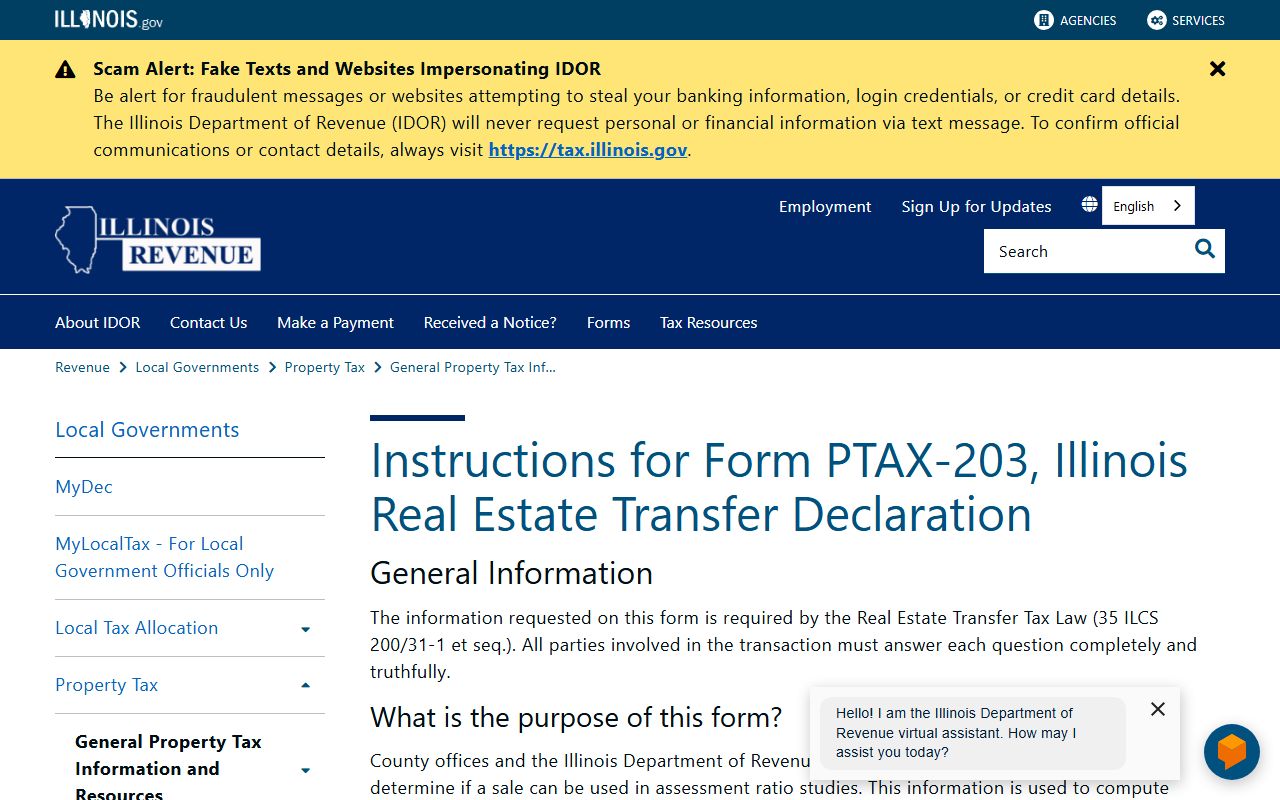
If you're not sure whether your transfer is taxable or exempt, or how to complete a particular section of the form, the Department of Revenue's property tax division can help. You can also use the MyDec portal to submit the declaration electronically if Saline County participates in that program.
How to Record in Saline County
There are three ways to record a deed at the Saline County Recorder's office.
In person. Bring the original signed and notarized deed, your completed PTAX-203 (or MyDec confirmation), and payment to 10 E. Poplar St. in Harrisburg. The recorder reviews your document, stamps it, collects fees, and typically hands it back the same day. This is the fastest and most reliable method.
By mail. Send the original deed, transfer declaration, and a check or money order to the recorder's address. Add a self-addressed stamped envelope for return of the recorded document. Always call ahead to confirm the exact fee. If you underpay, the recorder will hold the document and you'll need to send an additional payment before it gets recorded.
eRecording. Under 765 ILCS 33, Illinois counties may accept documents submitted electronically through approved vendors. Contact the Saline County Recorder at (618) 253-8197 to ask whether eRecording is available and which platforms are accepted. Common vendors include Simplifile, CSC, EPN, Hopdox, and Indecomm.
Searching Saline County Deed Records
The recorder maintains a grantor-grantee index covering all recorded instruments. You can search in person at the Harrisburg office by party name or by PIN. Staff can assist with basic lookups during regular office hours.
Call the recorder or visit the county website to find out whether an online deed search portal is available. Some Illinois counties have digitized their indexes and made them accessible through a web portal. Where available, you can search by grantor, grantee, or parcel number and view scanned document images. Records predating digitization may require an in-person request.
For a formal title search, a licensed title company or abstractor in Saline County is the best choice. They know the records, can identify title problems, and can issue title insurance to protect buyers and lenders. Certified copies of recorded documents are available from the recorder's office for a fee, and they carry the county seal for use in legal and financial transactions.
Electronic Recording Under 765 ILCS 33
The Illinois Electronic Commerce Security Act at 765 ILCS 33 provides the legal framework for eRecording in Illinois counties. The screenshot below shows the text of this statute as published:
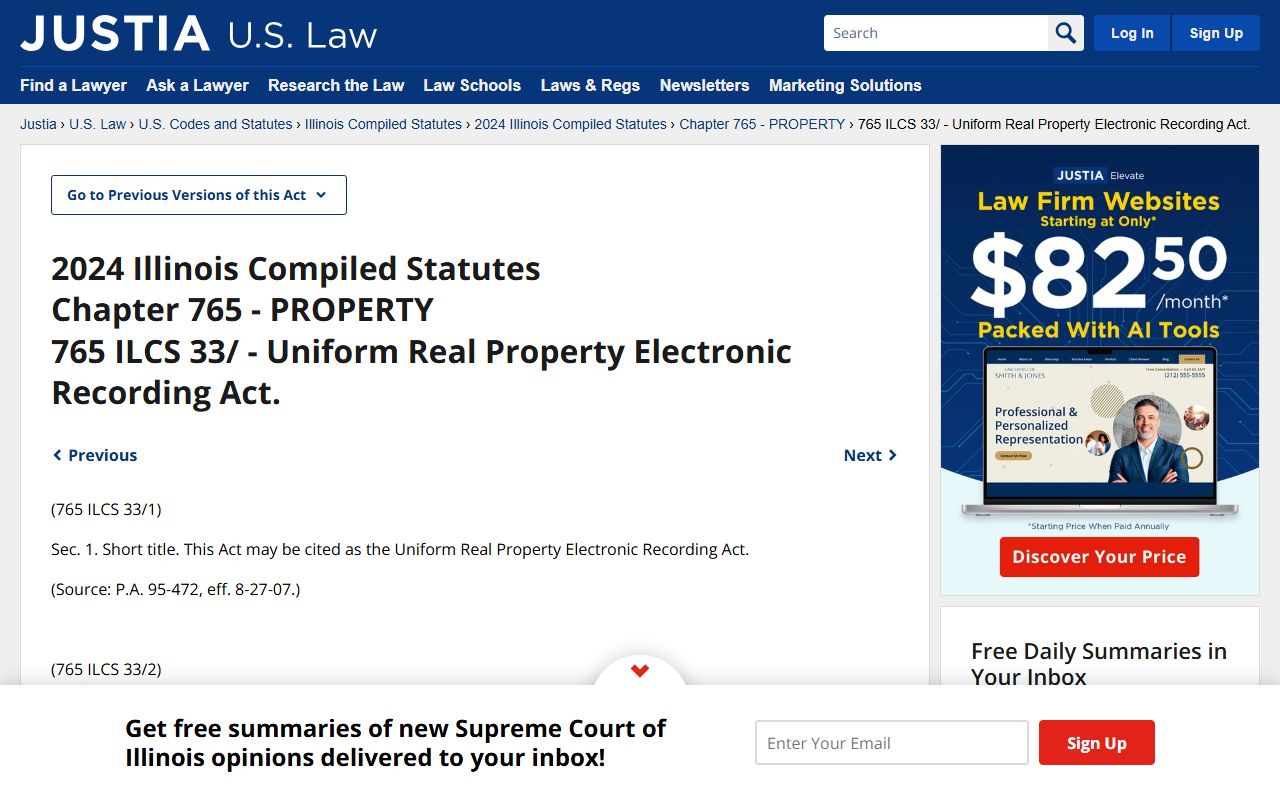
When a county accepts eRecording, title companies and attorneys can submit documents directly through their software without mailing originals. The recorder stamps and returns the document electronically within hours or days rather than the days or weeks mail can take.
Governing Laws
The key statutes that apply to deed recording in Saline County:
- 765 ILCS 5 - Conveyances Act. Governs how deeds are prepared, acknowledged, and recorded in Illinois.
- 55 ILCS 5/3-5018 - County recorder authority, indexing duties, and recording fee schedule.
- 35 ILCS 200 - Property Tax Code. Governs PIN assignment, assessments, and how recorded transfers update ownership records.
- 765 ILCS 33 - Electronic Commerce Security Act. Enables eRecording in Illinois counties.
Resources and Legal Help
For free guidance on recording property documents, visit Illinois Legal Aid Online. Their guides cover what to bring, how fees work, and how to handle a rejection. For legal questions about title, ownership disputes, or liens, consult a licensed Illinois real estate attorney. The Illinois State Bar Association runs a lawyer referral service that can connect you with attorneys practicing in the southern Illinois area.
After your deed is recorded, notify the Saline County Assessor to update ownership in their files. Tax bills will keep going to the old owner until that update is made. Keep the stamped original deed in a safe place. It is your primary proof that the property was legally transferred.
Nearby Counties
Saline County borders several other southern Illinois counties, each with its own recorder's office for land records.